 Pb28
Pb28 Automated Evergreen Content Engine & Monetization Architecture
Website Structure, Monetization Readiness, & Compliance Report
1. Executive Summary
The static codebase for EcoVibe Living represents a clean, semantic, and structurally complete multi-page informational architecture. It has been specifically designed to capture traffic within the highly profitable global sustainable lifestyle vertical.
The technical deployment relies entirely on high-performance static HTML5 and CSS3 components, completely removing database overhead. From a monetizaton perspective, the site structure aligns meticulously with early-stage Google AdSense mandatory submission requirements, containing all required structural, legal, and operational landing interfaces.
2. Structural & Architectural Audit
2.1 Content Map & Core Hierarchy
The project features a modular distribution pattern across multiple entry points:
-
Root Documents: Includes consumer facing entry configurations (
index.html), mission overviews (about.html), and validation pathways (contact.html). -
Legal Tier: Houses individual disclosure files mandatory for validation under programmatic privacy frameworks (
privacy-policy.html,cookie-policy.html,terms-of-service.html,disclaimer.html). -
Article Repositories: A highly focused subdirectory (
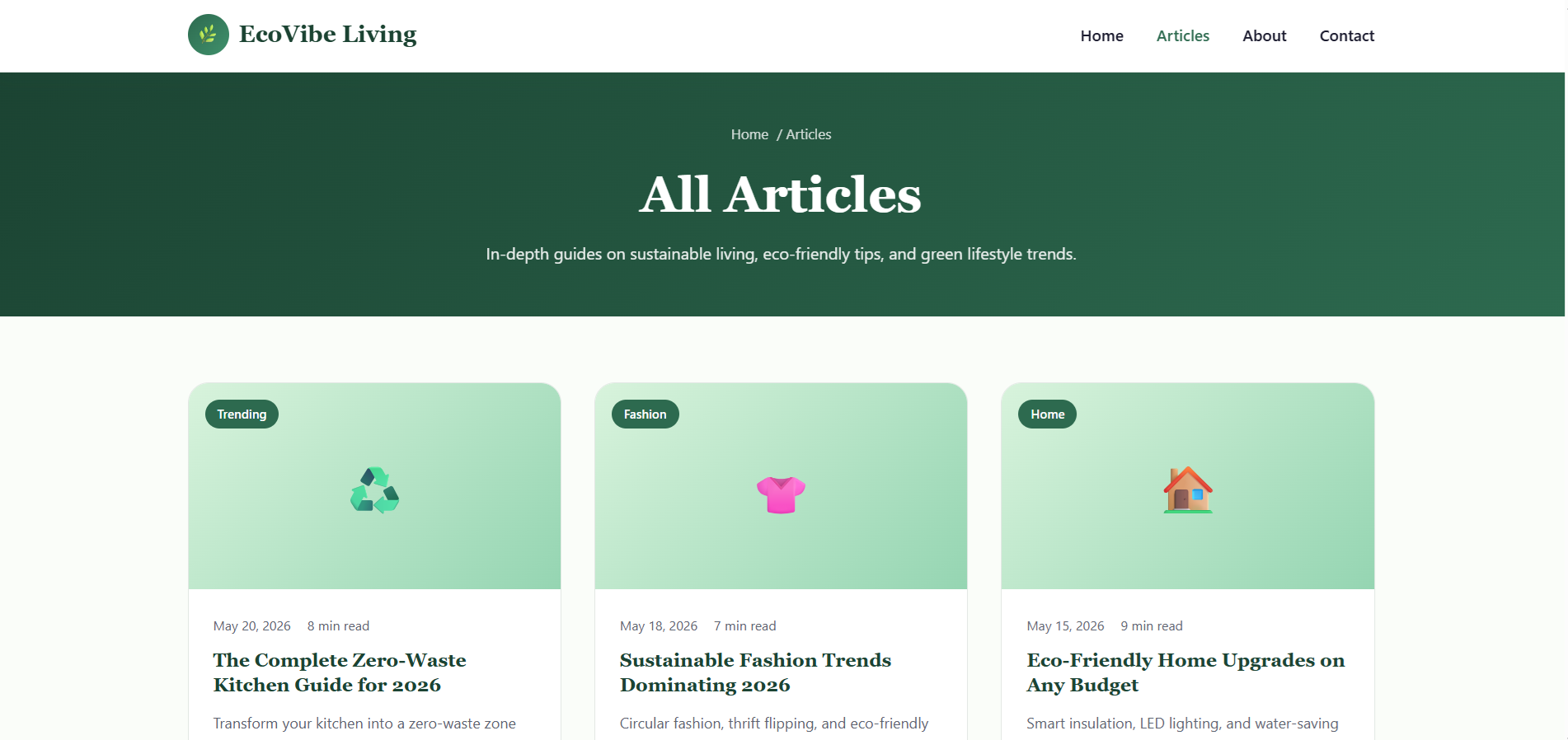
/articles/) hosting 8 in-depth, evergreen programmatic content items ranging from 6 to 10-minute read sizes.
2.2 Content Footprint Verification (Evergreen Performance)
The site includes high-quality text assets managed by unique niche persona parameters:
-
Zero-Waste Vertical: Supported by detailed waste-auditing techniques and plastic alternatives.
-
Home Efficiency Vertical: Analyzes return-on-investment parameters for smart power systems, sealing infrastructure, and solar panel setups under 2026 regulatory guidelines.
-
Lifestyle & Circular Economy: Explores sustainable fashion, upcycling, microplastic concerns, and carbon travel tracking equations.
3. Google AdSense Approval Compliance Matrix
Before submitting the live property to the AdSense program, structural assets must be cross-referenced against the programmatic parameters implemented in the codebase:
| # | Compliance Requirement | Code Verification / File Location | Action Required Below |
| 1 | Mandatory Privacy Policy |
|
None. Update the placeholder URL to match your live domain. |
| 2 | Granular Cookie Consent |
|
Ensure server deployment matches the script initialization states. |
| 3 | Content Footprint Minimum |
8 high-word-count, semantic articles initialized inside the |
Expand Content. Expand portfolio footprint to 15–30 articles before initializing review request. |
| 4 | Public Trust & Validation |
Functional |
Personalize coordinates to override generic default strings. |
4. Technical SEO & Performance Hardening Data
4.1 Schema Markup Evaluation
The homepage incorporates structured JavaScript Object Notation Linked Data (application/ld+json) matching the WebSite framework schema specification. Individual article pages include structural extensions to declare authorship nodes directly (Sarah Richardson, Emma Lopez, Michael Kumar), ensuring alignment with search engine trust standards.
4.2 Traffic Crawl Configurations
-
Index Controls: A complete
robots.txtrouting layout allows index matching across all standard user-agent configurations while pointing explicitly to document structures. -
Sitemap Distribution: Explicit sitemap configurations (
sitemap.xml) map the priority nodes of every structural document from1.0(Homepage) to0.5(Legal files), allowing predictable crawl prioritization.
5. Deployment Hardening Recommendations
To scale this asset efficiently to live servers, execute the following implementation steps:
-
Enforce Canonical Domains: Run a global find-and-replace command across all code files to transition instances of the template URL # to your targeted production domain location.
-
Integrate Live Form Actions: Replace the client-side mock function block inside
js/main.jswith an endpoint action URL pointing to your backend handling service (e.g., a PHP mail script or third-party endpoint) to capture reader inquiries natively. -
Deploy Production Ad Units: Once approval is cleared, replace structural elements matching class name
.ad-containerwith raw asynchronous Google Ad Placement blocks:HTML<script async src="https://pagead2.googlesyndication.com/pagead/js/adsbygoogle.js?client=ca-pub-XXXXXXXXXXXXXXXX" crossorigin="anonymous">script> <ins class="adsbygoogle" style="display:block" data-ad-client="ca-pub-XXXXXXXXXXXXXXXX" data-ad-slot="XXXXXXXXXX" data-ad-format="auto" data-full-width-responsive="true">ins> <script>(adsbygoogle = window.adsbygoogle || []).push({});script>